
Are You Making These 5 Commercial Cleaning Mistakes? (Restaurant Owners, This Is For You)


When I became a young father, scrambling to provide for my family, I worked every restaurant job you can imagine: dishwasher, prep cook, server, even night shift cleaning crew. My Japanese mother had taught me the value of meticulous attention to detail, while my father, a Navy musician from Georgia, instilled discipline and precision. But it was those late nights mopping floors and sanitizing equipment that really opened my eyes to how many restaurant owners were unknowingly sabotaging their own success through poor cleaning practices.
Today, as CEO of Southern Royalty Service LLC, I've seen the same costly mistakes repeated across hundreds of commercial kitchens. These errors don't just create health code violations: they destroy reputations, drive away customers, and can literally shut down your business overnight. Here are the five most dangerous cleaning mistakes I see restaurant owners making, and how you can avoid them.
Mistake #1: Using the Same Cloth for Everything
Walk into most restaurant kitchens during cleanup, and you'll see staff grabbing whatever rag is handy to wipe down every surface from the fryer to the bathroom door handle. This single practice spreads more bacteria than you can imagine.
I remember watching a busboy at one of my early jobs use the same towel to clean a toilet, then immediately head to the dining room to wipe tables where families would eat. The manager never noticed, but I couldn't unsee it. That moment taught me that good intentions mean nothing without proper systems.
The solution is implementing a color-coded cloth system. Red cloths for bathrooms, blue for dining areas, green for food prep surfaces, yellow for general cleaning. Train every team member on this system and make it non-negotiable. Your customers' health: and your business's future: depends on this simple discipline.
Mistake #2: Ignoring High-Touch Common Points
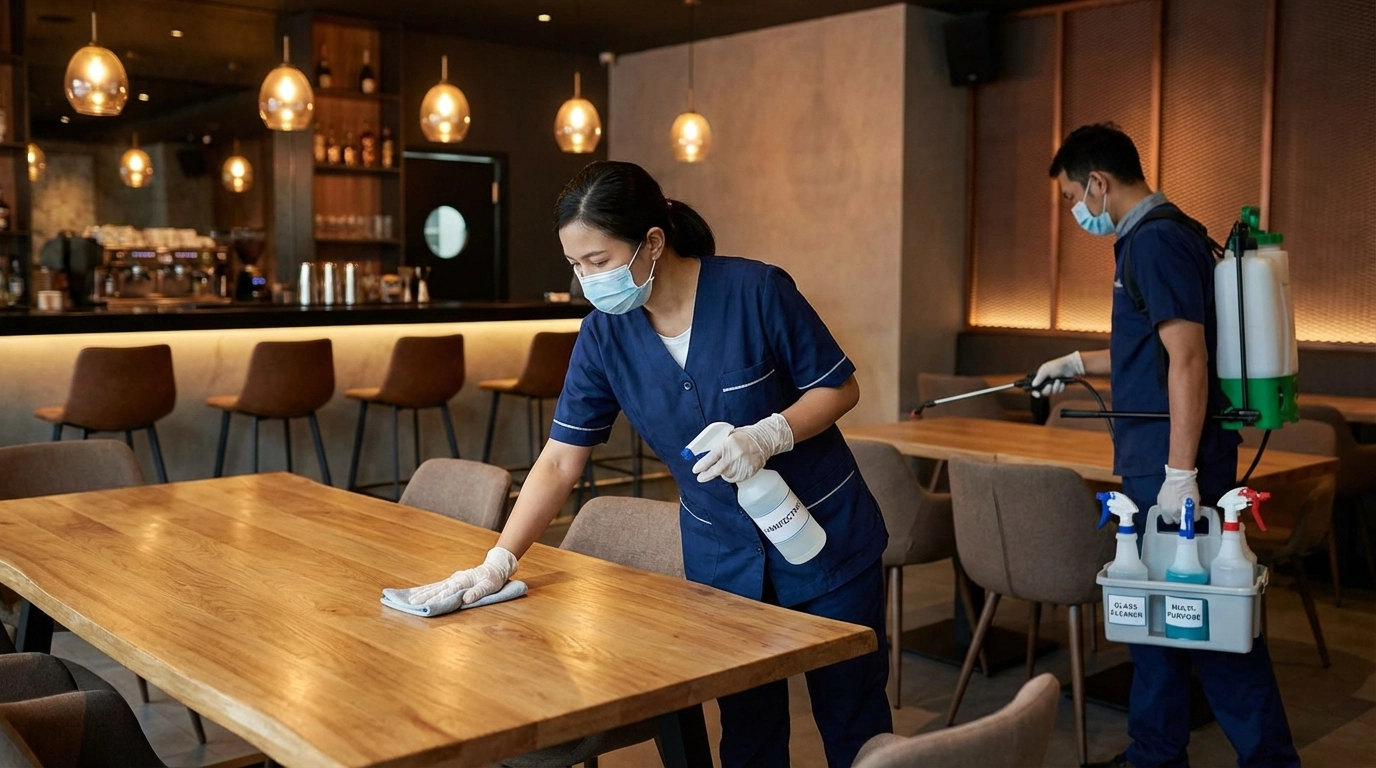
Door handles, light switches, cash registers, chair backs, condiment dispensers: these Common Touch Points (CTPs) harbor more bacteria than toilet seats, yet most restaurants treat them as afterthoughts during cleaning.
During my early parenthood years, working multiple restaurant jobs to support my family, I watched managers obsess over making sure the floors looked clean while completely ignoring the surfaces customers actually touched. The result? Sick customers, terrible reviews, and eventually, empty dining rooms.
CTPs require dedicated attention every single shift. Create a checklist that specifically calls out these areas and assign responsibility to specific team members. Don't let anyone clock out without initialing that they've properly sanitized every high-touch surface in their area.
Mistake #3: Spreading Dirt Instead of Removing It
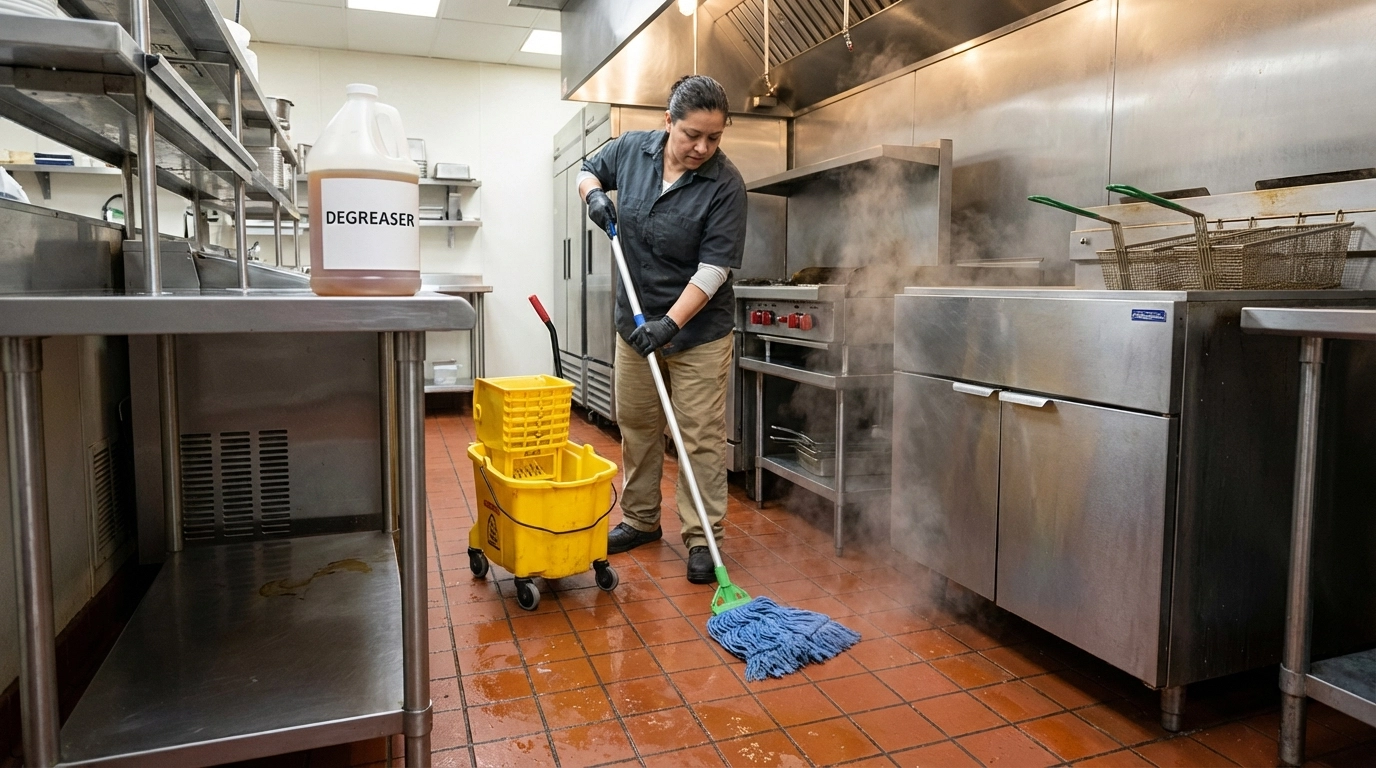
I've seen countless restaurant workers think they're cleaning floors when they're actually just spreading grease, food particles, and bacteria around. Using dirty mop water, worn-out mops, or the wrong technique turns cleaning into contamination.
The proper approach requires fresh mop water for each area, clean mops that actually pick up dirt instead of pushing it around, and the right cleaning solutions for different types of spills. When dealing with grease, you need degreasers. For sticky spills, you need different chemistry entirely.
During those tough years when I was learning these lessons the hard way, I realized that cleaning isn't just about making things look better: it's about creating environments where people can thrive. That understanding, rooted in faith and the desire to serve others well, transformed how I approached every task.
Mistake #4: Neglecting Equipment Deep Cleaning
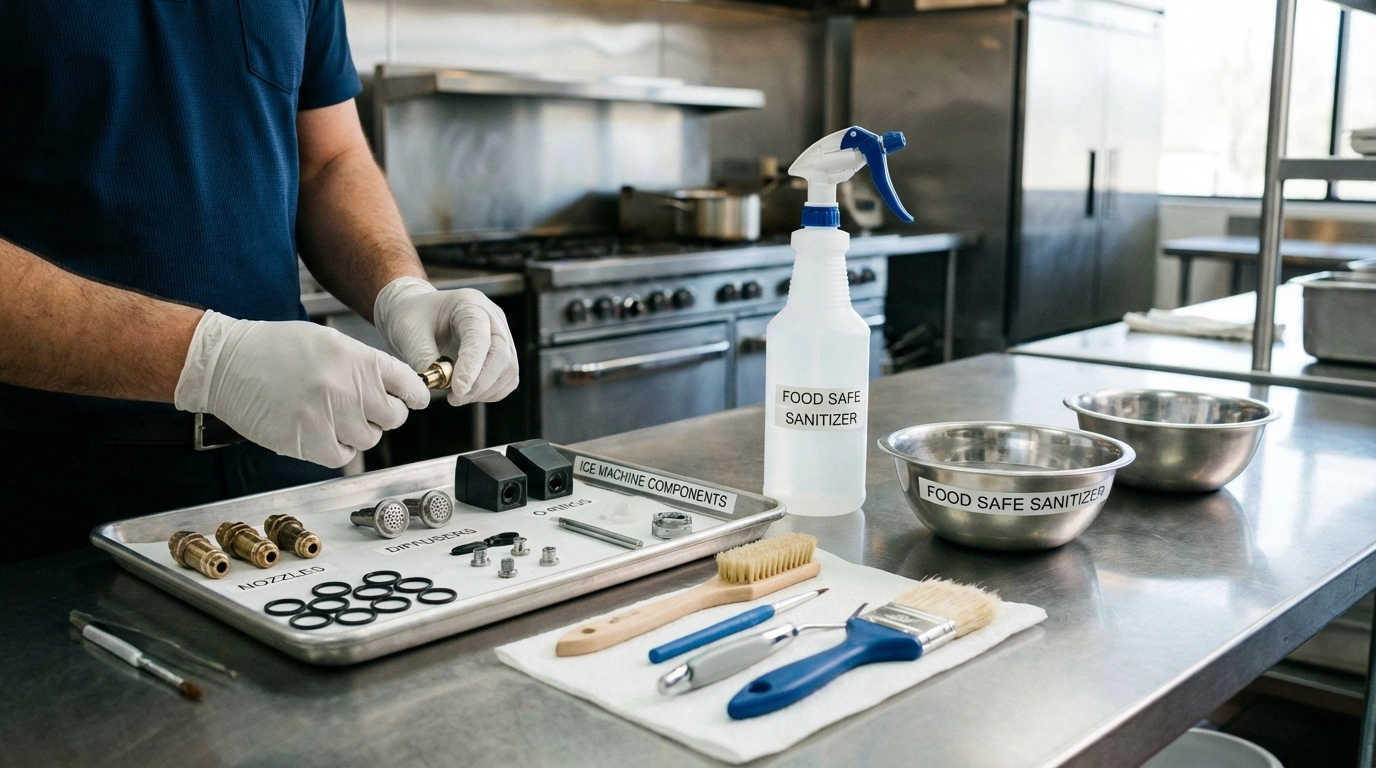
Ice machines, soda dispensers, coffee equipment, fryers: these money-making machines require regular deep cleaning that goes far beyond wiping down the outside. Yet most restaurants only address visible surfaces, allowing hidden buildup that compromises food quality and creates health hazards.
Ice machines need weekly deep cleaning to prevent mold and scale. Soda machine nozzles must be completely disassembled and sanitized. Coffee equipment requires daily cleaning cycles and weekly deep maintenance. Fryer oil systems need proper filtration and cleaning protocols.
The hardest lesson I learned during my restaurant days came when I watched a popular family restaurant get shut down by the health department because they'd neglected their ice machine for months. The buildup was so severe it took professional remediation to fix. The restaurant never reopened.
Don't let equipment neglect destroy everything you've built. Create maintenance schedules for every piece of equipment and stick to them religiously.
Mistake #5: Inadequate Kitchen Deep Cleaning
The areas customers can't see: behind equipment, under fryers, inside walk-in coolers: often receive the least attention, yet they're where the most serious problems develop. Food debris accumulates, pests move in, and bacterial growth explodes in these forgotten spaces.
My father's Navy background taught me that true cleanliness happens in the places no one sees. "If you can't maintain discipline when nobody's watching," he'd say, "you can't maintain it when it matters most." This principle applies perfectly to restaurant kitchens.
Proper kitchen sanitization requires moving equipment, cleaning underneath and behind everything, emptying and cleaning grease traps regularly, and maintaining detailed cleaning schedules that include daily, weekly, and monthly tasks.

The Hidden Cost of Poor Cleaning
During one particularly challenging period in my early twenties: working three jobs to support my young family: I witnessed firsthand how poor cleaning practices destroyed a restaurant I'd grown to love. They served amazing food, had loyal customers, and employed good people. But inadequate cleaning protocols led to a failed health inspection, terrible online reviews, and ultimately, closure.
The owner lost everything: his life savings, his employees' jobs, and his family's legacy. All because he thought cleaning was just about appearances instead of understanding it as the foundation of food service success.
That experience reinforced my mother's teaching about attention to detail and my father's lessons about discipline. It also deepened my faith-based understanding that how we care for others: including through proper sanitation: is a reflection of our character and values.
Building Systems That Work
The solution to these mistakes isn't working harder: it's working smarter with proper systems. Every successful restaurant needs documented cleaning procedures, designated responsibilities, accountability measures, and regular training.
Start by creating detailed cleaning checklists for every area and shift. Assign specific tasks to specific team members. Implement the color-coded cloth system immediately. Establish equipment maintenance schedules and stick to them without exception.
Most importantly, help your team understand that cleaning isn't just about passing inspections: it's about serving customers with excellence and protecting the livelihoods of everyone who depends on your restaurant's success.
Partner with Professionals
While your team handles daily cleaning, consider partnering with professional cleaning services for deep cleaning, equipment maintenance, and specialized tasks. At Southern Royalty Service LLC, we've helped countless restaurants implement proper cleaning systems and avoid the costly mistakes that destroy businesses.
Professional services bring specialized equipment, proper training, and accountability that ensures your cleaning standards remain consistently high. We understand that your restaurant isn't just a business: it's your family's future, your employees' security, and your community's gathering place.
If you're ready to eliminate these dangerous cleaning mistakes and protect everything you've worked to build, get a quote for a comprehensive cleaning assessment. Let us help you create the systems that will keep your customers safe, your reputation strong, and your business thriving for years to come.
Your restaurant's success depends on more than great food: it requires the discipline, attention to detail, and commitment to excellence that proper cleaning provides. Don't let preventable mistakes destroy everything you've built.
Comments