
Are You Making These 5 Deep Cleaning Mistakes? (Restaurant Owners, This Could Save Your Business)

Your restaurant's reputation hangs on more than just great food and excellent service. Health inspectors, customers, and your bottom line all depend on maintaining pristine cleanliness standards that go far beyond what meets the eye. Yet every day, restaurant owners unknowingly make critical deep cleaning mistakes that put their businesses at serious risk.
Deep cleaning isn't just wiping down tables and mopping floors: it's the comprehensive sanitization process that reaches every corner, crevice, and surface where bacteria, grease, and contaminants accumulate. When done incorrectly, you're not just missing dirt; you're potentially facing health code violations, customer illness, fire hazards, and reputation damage that can cost thousands in lost revenue.
At Southern Royalty Service LLC, we've seen these mistakes countless times across restaurants throughout the region. The good news? They're completely preventable when you know what to look for and how to fix them.
Mistake #1: Using the Same Cloth on Different Surfaces
Walk through most restaurants during cleaning time, and you'll witness one of the most dangerous cleaning practices: staff using a single cloth to wipe down everything from restroom fixtures to food prep surfaces. This cross-contamination nightmare spreads bacteria and pathogens throughout your establishment instead of eliminating them.
The health implications are staggering. That cloth used on a restroom door handle carries E. coli, salmonella, and other harmful bacteria directly to your customer dining areas and food preparation zones. You're essentially painting contamination across every surface your team touches.
The Solution: Implement a color-coded cleaning system immediately. Assign specific colored cloths and tools to designated areas: red for restrooms, blue for dining areas, green for food prep zones, and yellow for kitchen equipment. Train every team member on this system and make it non-negotiable. Establish proper folding techniques to maximize cloth surface area and prevent recontamination during use.

Mistake #2: Neglecting High-Touch Common Touch Points (CTPs)
Your customers touch dozens of surfaces during their visit, yet most restaurants focus cleaning efforts on obvious areas while completely missing the bacterial hotspots. Door handles, menu holders, salt and pepper shakers, ketchup bottles, POS terminals, light switches, and chair backs accumulate pathogens from hundreds of hands daily.
These common touch points (CTPs) are invisible disease vectors. A contaminated salt shaker can spread illness to every table it visits. An unsanitized POS screen becomes a bacteria breeding ground that your staff touches between handling food and money.
The Solution: Create a comprehensive CTP checklist identifying every high-touch surface in your restaurant. Implement a rotation system where these areas receive sanitization after each customer interaction and deep cleaning at shift changes. Train servers to recognize and prioritize CTP cleaning as part of their table turnover routine. Document this process for health inspector compliance.
Mistake #3: Improper Spill and Floor Cleaning Techniques
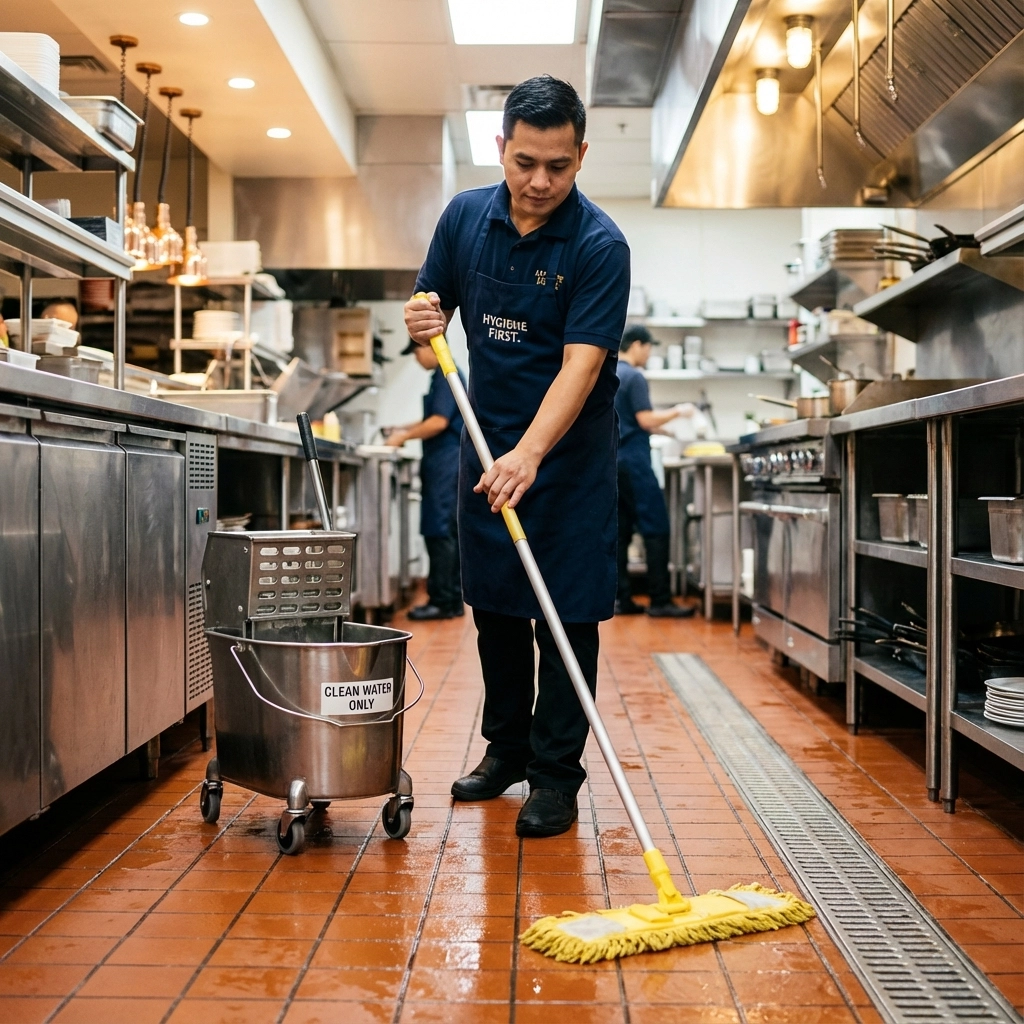
Most restaurant floor cleaning actually spreads contamination rather than removing it. Using wrong mopping techniques, dirty mop water, or inappropriate tools pushes grease, food particles, and bacteria into grout lines and hard-to-reach corners where they multiply and create persistent odor and health hazards.
Floor drains present another overlooked danger. When neglected, they accumulate grease, food debris, and standing water that becomes a breeding ground for harmful bacteria while creating unpleasant odors that customers notice immediately.
The Solution: Invest in proper floor cleaning equipment designed for your specific flooring type. Use fresh, hot water with appropriate degreasers for each mopping session. Clean floors in sections, changing mop water frequently to prevent spreading contamination. Schedule weekly deep cleaning of floor drains using antimicrobial solutions to prevent clogs and bacterial growth.
Mistake #4: Inconsistent Cleaning Frequency and Lack of Systematic Approach
Without a structured cleaning schedule, critical deep cleaning tasks fall through the cracks. Many restaurants operate on reactive cleaning: addressing problems only when they become visible or problematic. This approach guarantees health code violations and creates compounding contamination issues.
The absence of written protocols means cleaning quality depends entirely on individual staff knowledge and motivation. When employees leave or work different shifts, cleaning standards become inconsistent and unreliable.
The Solution: Develop comprehensive cleaning checklists broken down by frequency: daily maintenance, weekly deep cleaning, and monthly intensive sanitization. Specify which chemicals, equipment, and techniques to use for each task. Create accountability measures with sign-off sheets and regular inspections. This systematic approach ensures nothing gets missed regardless of staffing changes.
Mistake #5: Failing to Deep Clean Behind, Under, and Inside Equipment
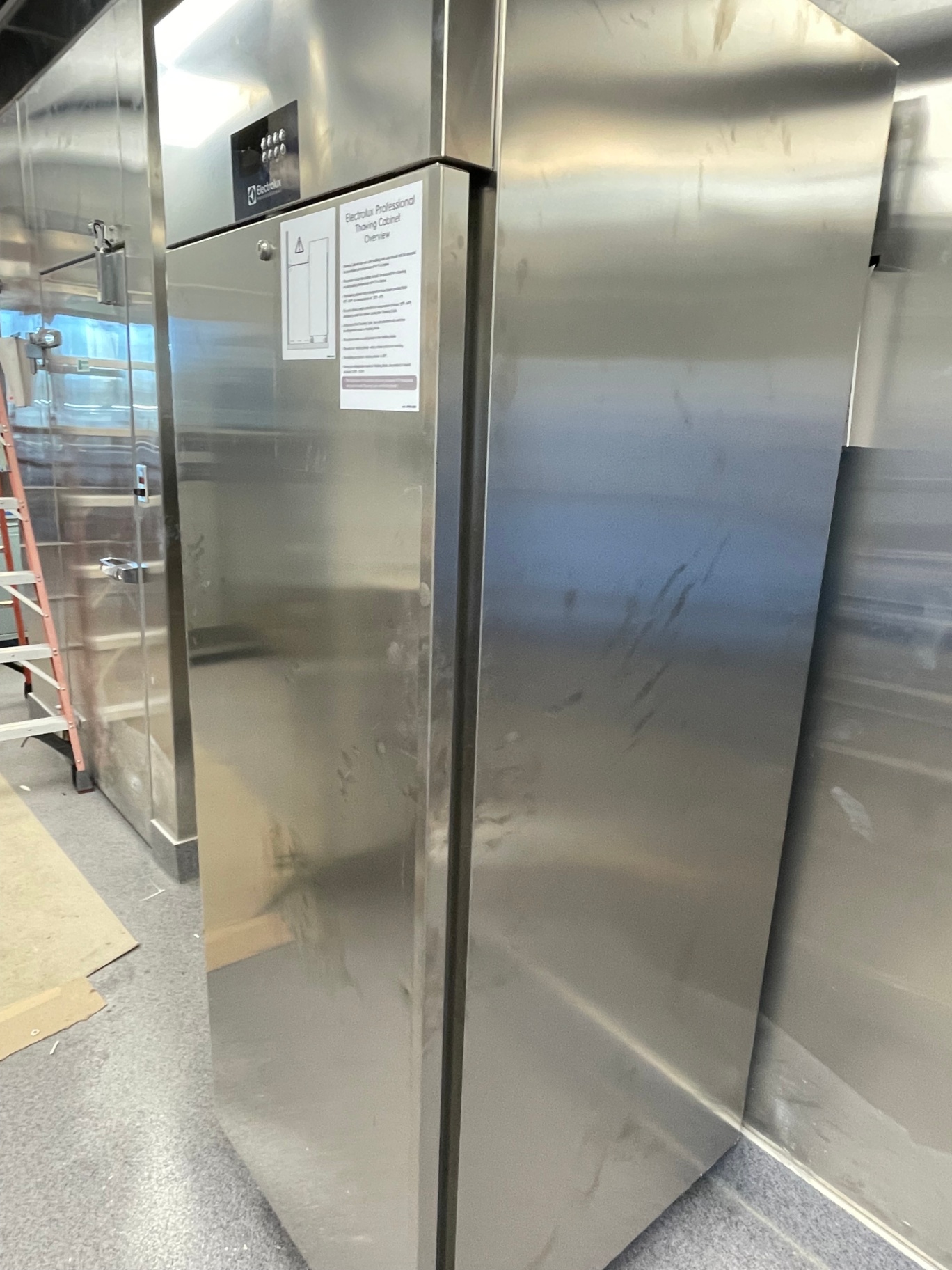
Large kitchen equipment like ovens, deep fryers, refrigerators, and ranges are difficult to move, so cleaning beneath and inside them gets postponed indefinitely. This creates dangerous accumulations of grease and food debris that pose serious fire hazards: commercial kitchen fires cause over $246 million in annual property damage, with accumulated grease being a primary factor.
Inside equipment surfaces harbor bacteria that contaminate food directly. Fryer oils absorb flavors from uncleaned internal surfaces, affecting food quality. Refrigerator interiors with buildup compromise food safety and equipment efficiency.
The Solution: Schedule monthly deep cleaning of all major equipment, including complete disassembly when manufacturer guidelines permit. Use proper lifting equipment to safely move heavy appliances for underneath cleaning. For deep fryers, drain wells completely, clean drain lines, and scrub internal surfaces with eco-friendly degreasers followed by hot water boiling cycles. Document equipment cleaning for warranty compliance and health inspections.
The Hidden Costs of These Mistakes
These deep cleaning mistakes don't just risk health violations: they impact your bottom line in multiple ways. Failed health inspections can result in closure orders, fines, and mandatory re-inspections that disrupt operations and damage reputation. Customer illness outbreaks linked to your restaurant can trigger lawsuits, insurance claims, and permanent brand damage.
Equipment failures from poor maintenance cost thousands in emergency repairs and replacement. Persistent odors from inadequate cleaning drive away customers and reduce table turnover. Staff turnover increases when employees work in unclean conditions, creating constant recruitment and training costs.
Why Professional Deep Cleaning Makes Business Sense
Professional cleaning services like Southern Royalty Service LLC understand the specific challenges restaurants face. We use commercial-grade equipment, EPA-approved sanitizers, and proven techniques that meet health department standards. Our systematic approach ensures comprehensive coverage while your team focuses on serving customers and generating revenue.
Professional deep cleaning provides documented compliance for health inspections, reduces insurance liability, extends equipment life, and creates the clean, welcoming atmosphere that keeps customers returning. The investment pays for itself through avoided violations, reduced maintenance costs, and improved customer satisfaction.
Taking Action Today
Start by conducting an honest assessment of your current deep cleaning practices against these five common mistakes. Document areas where improvements are needed and prioritize changes based on health risks and compliance requirements.
Remember, deep cleaning isn't an expense: it's an investment in your restaurant's long-term success. Every surface cleaned properly, every protocol followed correctly, and every contamination risk eliminated protects your customers, your staff, and your business reputation.
Don't let preventable cleaning mistakes jeopardize everything you've worked to build. Your customers trust you with their health and dining experience. Make sure your deep cleaning practices honor that trust with the thoroughness and professionalism they deserve.
Ready to eliminate these risks and ensure your restaurant maintains the highest cleanliness standards? Contact Southern Royalty Service LLC today for a comprehensive deep cleaning consultation that protects your business and enhances your reputation.
Comments